What is a Copper Nickel Expander Flange?
A Copper Nickel Expander Flange is a specially forged flange that combines the function of a standard Weld Neck Flange with an integral concentric reducer — in a single forged fitting. The pipe bore of the flange is smaller than the bore at the flange face, effectively expanding the pipeline from a smaller bore pipe to a larger bore system at the flange connection point. This eliminates the need for a separate pipe reducer fitting between the flange and the larger bore pipeline.
Sunflex Metalloy manufactures CuNi Expander Flanges in CuNi 90/10 (UNS C70600) and CuNi 70/30 (UNS C71500) per ASTM B151, conforming to ASME B16.5 and ASME B16.47 flange dimensional standards.
Features & Benefits
- Eliminates the need for a separate reducer fitting — reduces overall spool piece count, weight, and installation cost
- Single forged unit with integral taper — provides smooth bore transition minimising turbulence and pressure drop
- Available in Weld Neck configuration — butt-welded to smaller bore pipe for maximum joint strength
- Flange face (OD, bolt circle, bolt holes) matches standard ASME B16.5 dimensions for the nominal flange size
- Bore at the pipe end matches the smaller pipe schedule for butt weld preparation
- CuNi 90/10 and CuNi 70/30 provide full corrosion resistance in marine and seawater service
- Compliant with ASTM B151, ASME B16.5, ASME B16.47, ASME B16.9 (reducer geometry reference)
- Particularly useful at pump suction/discharge nozzle connections where pipe bore changes occur
Industry Applications
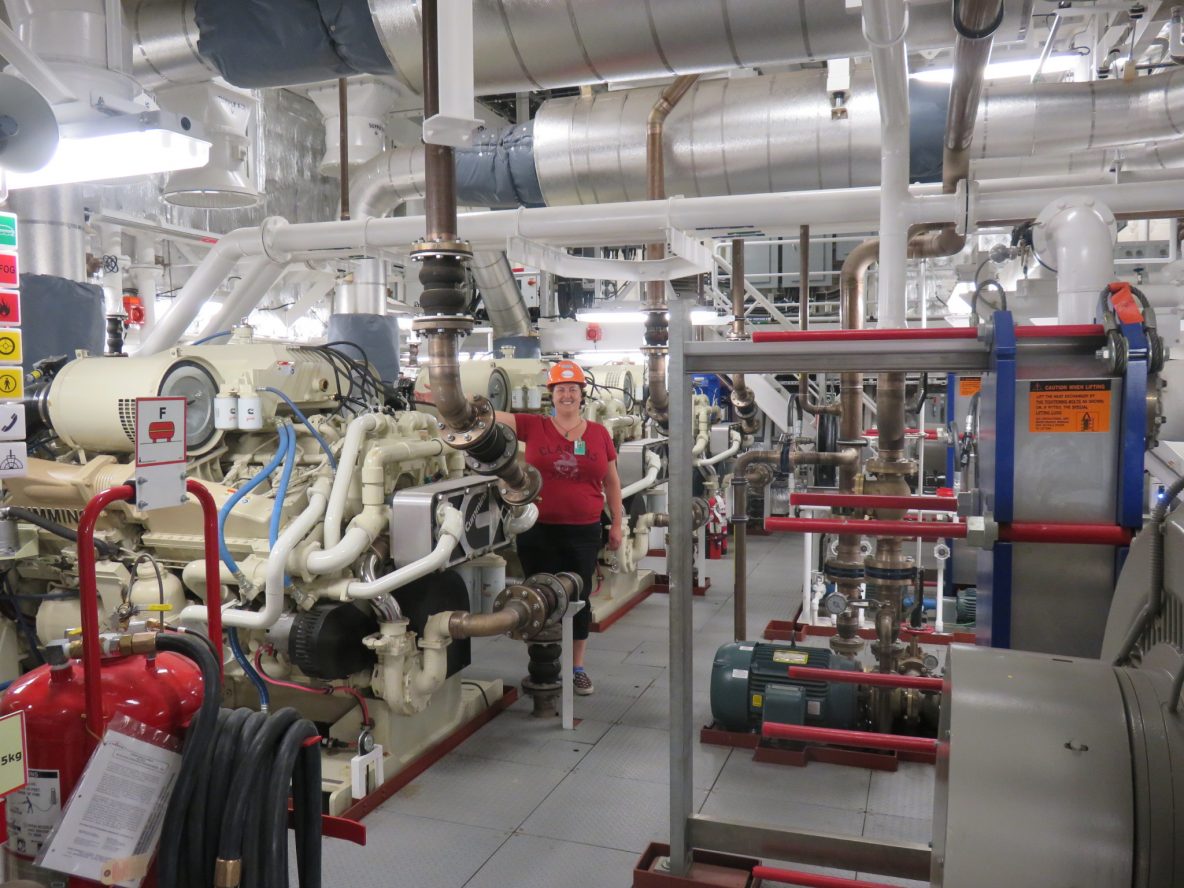
Ship seawater cooling circuits, air conditioning sea water lines
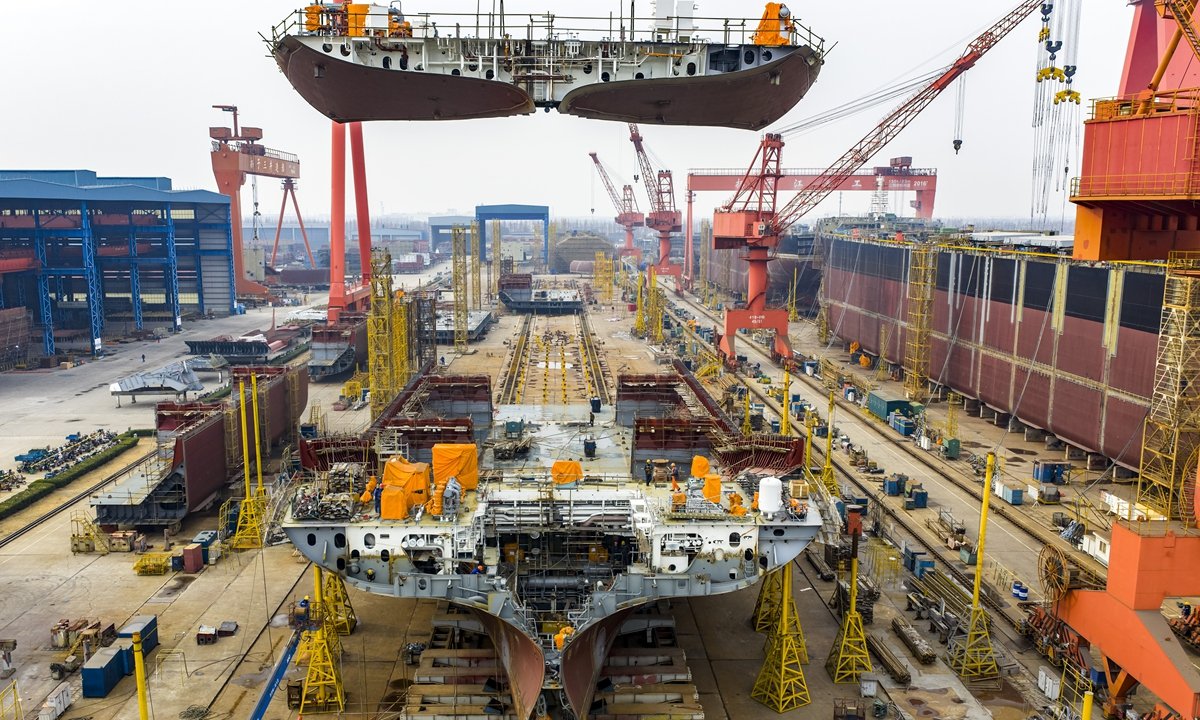
Ballast water systems, bilge, fire main and general service piping
Low-pressure intake and outfall piping, auxiliary seawater circuits

Utility seawater headers, non-critical process piping on platforms

Cooling water distribution headers in coastal power generation facilities
Jetty seawater supply systems, port utility piping installations
Manufacturing Process
Raw Material
Billet Heating
Hot Forging
Heat Treatment
CNC Machining
NDT & Testing
Final Inspection
Dispatch
All CuNi flanges are forged from ASTM B151 billets, heat treated (annealed) to restore ductility per ASTM B151 requirements, then CNC machined to ASME B16.5 / B16.47 dimensional tolerances. Full quality records and heat treatment certificates accompany every delivery.
Quality Testing Program
PMI Testing
XRF-based Positive Material Identification per ASTM B151 for Cu, Ni, Fe, Mn chemistry verification on every heat number.
Hydrostatic Test
Shell hydrostatic testing at 1.5× rated pressure per ASME B16.5 / API 598 with hold time verification and certified results.
Ultrasonic Testing (UT)
Volumetric UT per ASTM A388 / EN 10228-3 on all forgings to detect internal flaws before and after machining.
Dye Penetrant (DPT)
Surface DPT per ASME Section V / ASTM E165 on flange faces and bore after final machining operations.
Dimensional Inspection
100% dimensional check per ASME B16.5 / B16.47 tables using calibrated vernier, micrometers, and CMM instruments.
Mechanical Testing
Tensile, yield, elongation, and Brinell hardness per ASTM B151 on test coupons from each production heat.
⚠ Important Note
When specifying a CuNi Expander Flange, both the flange size (pipe size at the equipment/mating flange) AND the pipe bore size (smaller pipe being connected) must be specified. For example: 8" × 6" Expander Flange, Class 600, CuNi 90/10, RF, ASME B16.5. The wall thickness at the smaller bore end must be compatible with the pipe schedule of the smaller pipe being welded.
Technical Specifications
Mechanical Properties — ASTM B151
| Property | CuNi 90/10 (C70600) | CuNi 70/30 (C71500) |
|---|---|---|
| Tensile Strength (UTS) | 275 MPa (40 ksi) min | 380 MPa (55 ksi) min |
| Yield Strength (0.2%) | 105 MPa (15 ksi) min | 170 MPa (25 ksi) min |
| Elongation (50 mm GL) | 30% minimum | 30% minimum |
| Brinell Hardness (HB) | ≤ 100 HB | ≤ 120 HB |
| Density | 8.94 g/cm³ | 8.94 g/cm³ |
| Modulus of Elasticity | 132 GPa | 152 GPa |
Chemical Composition — ASTM B151
| Element | CuNi 90/10 (C70600) | CuNi 70/30 (C71500) |
|---|---|---|
| Copper (Cu) | Remainder (~88–90%) | Remainder (~65–70%) |
| Nickel (Ni) + Co | 9.0 – 11.0% | 29.0 – 33.0% |
| Iron (Fe) | 1.0 – 1.8% | 0.40 – 1.0% |
| Manganese (Mn) | 1.0% max | 1.0% max |
| Lead (Pb) | 0.02% max | 0.02% max |
| Zinc (Zn) | 0.50% max | 0.50% max |
| Carbon (C) | 0.05% max | 0.05% max |
| Sulfur (S) | 0.02% max | 0.02% max |
Material Traceability
Every CuNi flange is manufactured with full heat traceability. Chemical composition is verified by OES (Optical Emission Spectrometry) on each heat and confirmed by XRF-based PMI prior to dispatch. MTC provided per EN 10204 3.1 (standard) or 3.2 (third-party witnessed) per project requirements.
Equivalent Grades — International Standards
| Standard | CuNi 90/10 Designation | CuNi 70/30 Designation |
|---|---|---|
| UNS (ASTM) | C70600 | C71500 |
| DIN / W.Nr. | CuNi10Fe1Mn / 2.0872 | CuNi30Mn1Fe / 2.0882 |
| EN (CW No.) | CW352H | CW354H |
| BS | CN102 | CN107 |
| MIL Spec | MIL-T-16420 (Comp B) | MIL-T-16420 (Comp A) |
| NORSOK MDS | C-600 (CuNi 90/10) | C-601 (CuNi 70/30) |
Frequently Asked Questions
A CuNi Expander Flange is specified by: (1) Flange nominal size (the larger, equipment-side bore); (2) Pipe bore size (the smaller pipe being connected); (3) Pressure class per ASME B16.5; (4) Facing type (RF, FF, RTJ); (5) Material grade (CuNi 90/10 or CuNi 70/30); (6) Pipe schedule at the smaller bore end. Example: '8" × 6" Expander Flange, Class 600 RF, CuNi 90/10, ASME B16.5, Pipe End: Sch 10S per ASTM B466'.
Expander flanges are typically available with one to three pipe sizes of bore reduction from the nominal flange size. For example, an 8" flange can be combined with a 4", 5", or 6" pipe bore. The internal taper angle is designed to maintain smooth flow transition and avoid separation. Very large bore reductions (more than 3 sizes) are better served by separate concentric reducer and flange combinations due to the extreme taper geometry required.
Yes — this is their primary advantage. A conventional spool consisting of a reducer welded between two flanges can be replaced by a single Expander Flange at one end, potentially saving two welds, one fitting, and 300–600mm of spool length depending on the reducer dimensions. This is particularly valuable in congested equipment rooms on ships and offshore platforms where space and weight are critical.
Expander Flanges are typically made-to-order items as the specific bore combination (flange size × pipe bore size × pressure class) must be manufactured to the individual order requirements. Sunflex Metalloy manufactures CuNi Expander Flanges from billets per ASTM B151 to customer specifications. Lead time is typically 4–8 weeks depending on size and quantity. Please contact our sales team with your specifications for a quotation.